
ASTANA – Kazakhstan presented its contemporary literature and publishing industry at the 35th Abu Dhabi International Book Fair as the country steps up efforts to promote reading culture at home and expand the international reach of Kazakh literature, the Ministry of Culture and Information’s press service reported on Sept. 21.
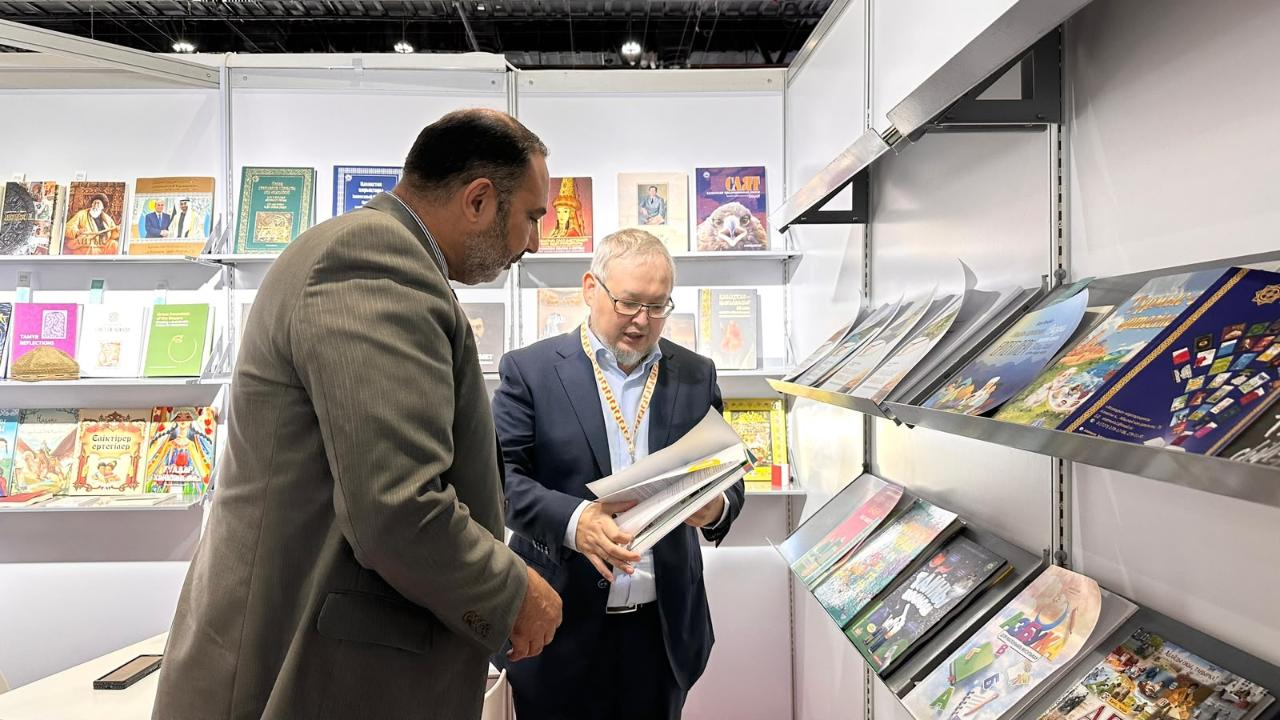
Kazakhstan highlights reading culture and literature at Abu Dhabi Book Fair. Photo credit: Ministry of Culture and Information.
Kazakhstan’s delegation met with international publishers, literary agencies and cultural organizations to discuss translating Kazakh literature into foreign languages, promoting authors’ and publishing rights and developing joint literary and cultural projects.
The Nomad Culture Foundation organized the participation with support from Kazakhstan’s Ministry of Culture and Information and assistance from the Embassy of Kazakhstan in the United Arab Emirates.
Reading becomes a national policy priority
The international promotion of Kazakh literature comes as reading culture has gained renewed attention within Kazakhstan. On May 16, President Kassym-Jomart Tokayev signed a decree on developing reading culture and forming a “reading nation,” defining the promotion of reading as a priority in culture, education and innovation policy. The decree calls for a national concept on promoting reading culture and the book industry in the age of artificial intelligence for 2027–2031. It also provides for a national digital library platform, a new law on library and publishing activities and a national award for achievements in developing reading culture.
The policy comes amid a wider international debate over foundational skills in an increasingly digital and AI-driven economy. The OECD’s latest PISA results show that Kazakhstan’s 15-year-old students performed below the OECD average in reading, mathematics and science in 2025. In reading, 36% of students in Kazakhstan reached at least Level 2 proficiency, compared with 69% across OECD countries. Kazakhstan’s reading performance remained broadly unchanged from 2022 and has been relatively stable since 2009.
The PISA 2025 assessment also emphasizes the relevance of reading skills in the digital environment. The OECD found that reading performance declined substantially across OECD countries, including in skills such as evaluating information, connecting information from different sources and thinking critically about what is read.
From access to reading habits
Against this backdrop, Kazakhstan’s reading policy extends beyond simply increasing access to books. The presidential decree sets out measures covering libraries, publishing, digital access and the promotion of reading as part of the country’s human-capital development agenda.
Kazakhstan’s presence at international book fairs provides another element of this effort by giving domestic authors and publishers access to foreign publishing markets and potential translation partnerships.
