
The new methodology for calculating copper concentrate processing tariffs raises a broader question: how competitive and predictable will Kazakhstan’s copper value chain be for international business?
Kazakhstan is seeking to develop domestic processing and create more value within the country. This is particularly important for copper, as the country has a significant resource base while the metal is becoming increasingly important for global industry, energy and technology.
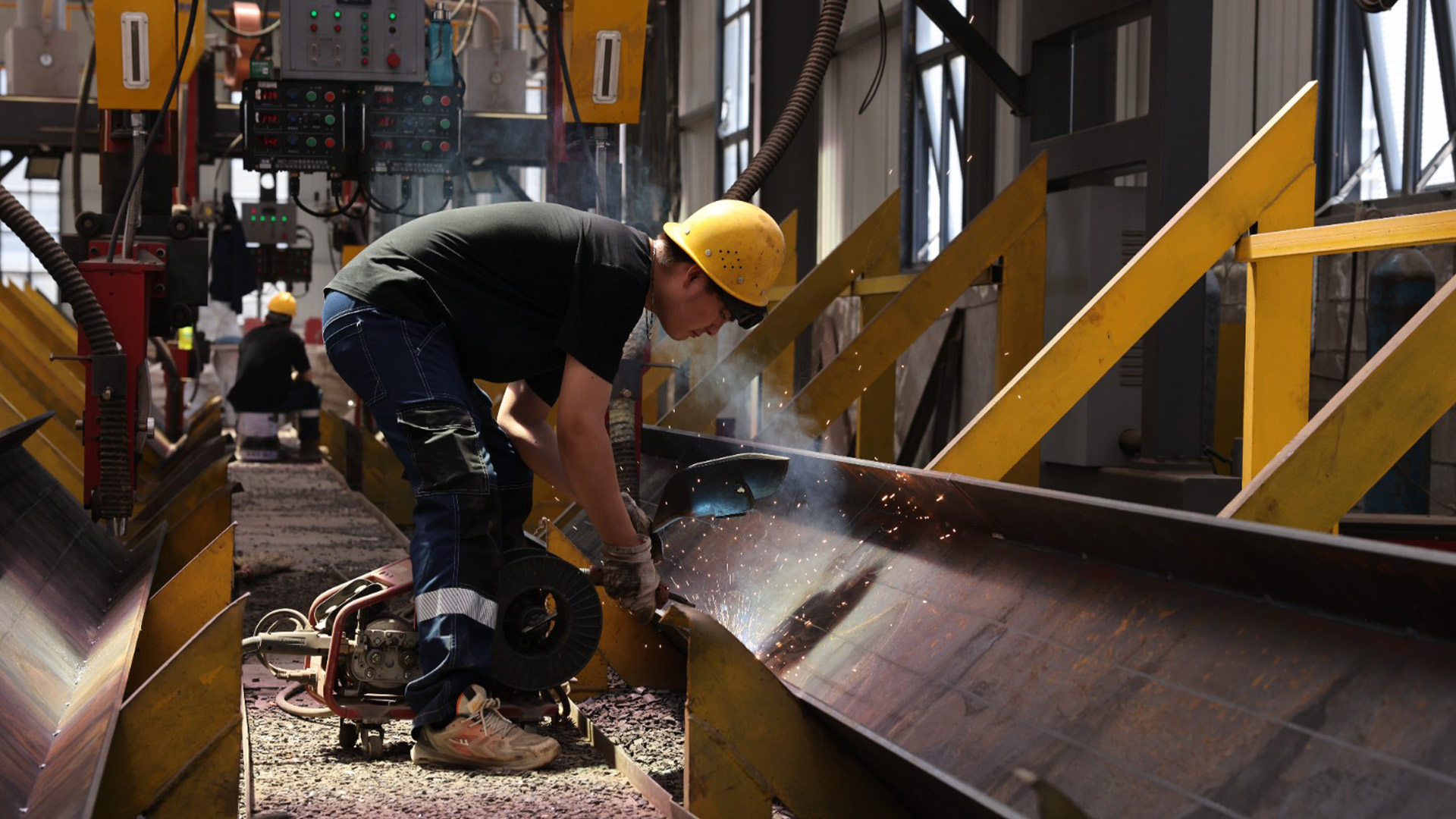
Photo credit: Press service of Kazakhstan’s Prime Minister.
Against this backdrop, the Ministry of Industry and Construction has proposed a new methodology for calculating the tariff for processing copper concentrate. The aim is to establish a unified and transparent mechanism for determining the cost of processing raw materials at copper smelting facilities in Kazakhstan.
Under the proposed approach, the tariff would be based on processing costs, a normative profit margin and investment components, including investment in new copper smelting capacity.
For the domestic market, this is primarily a question of tariff regulation. For international businesses, however, the issue is broader: how will the economics of Kazakhstan’s copper value chain be structured, and how competitive will these conditions be compared with the global market?
Global market, global benchmarks
Copper concentrate processing is part of an established international supply chain. Smelters and concentrate producers operate in a market where processing economics depend not only on domestic costs, but also on global supply and demand.
One of the key market benchmarks is the Treatment Charge (TC). When concentrate is abundant and smelting capacity is relatively limited, treatment charges tend to be higher. When concentrate becomes scarce, smelters compete for feedstock and TC declines.
In some market conditions, treatment charges can reach zero or even become negative.
This does not necessarily mean that smelting is uneconomic. Rather, it reflects the broader revenue structure of copper processing.
One concentrate, multiple sources of value
A copper smelter generates economic value from more than the treatment charge itself.
Copper and other metals, including precious metals, are recovered from the concentrate. Sulphur contained in the feedstock can be used to produce sulphuric acid, which also has an independent market value.
As a result, an international processor assesses the overall economics of the operation rather than simply the cost of the processing service. This includes the value and composition of the concentrate, recoverable metals, prices for final products, potential revenues from sulphuric acid and production costs.
This is why a zero or negative TC does not automatically indicate that processing is loss-making. Under certain market conditions, a smelter may accept concentrate without a treatment charge in order to maintain capacity utilisation and generate value from the metals and by-products recovered during processing.
What does this mean for Kazakhstan?
The proposed Kazakh methodology is primarily cost-based, taking into account processing expenses, a normative profit margin and investment costs.
This raises an important question: how does the calculation account for the revenue side of the business, including the economic value of additional metals and sulphuric acid?
For domestic regulation, this is a question of tariff design. For international investors, it is also a question of competitiveness and comparability.
A copper concentrate producer does not assess processing costs in isolation. The economics of the entire chain matter: mining, transportation, processing, financing and the sale of copper and associated products.
A change in the economics of one stage can therefore influence the attractiveness of the entire project.
From raw materials to global value chains
This issue is particularly relevant as Kazakhstan seeks to move from the export of raw materials towards higher-value production.
Developing domestic copper processing is consistent with this objective and could also strengthen Kazakhstan’s position in emerging international supply chains for critical minerals.
For investors, however, the equation goes beyond the availability of mineral resources or processing capacity. It includes the long-term predictability of regulations, logistics and processing costs, access to infrastructure, export opportunities and the overall stability of a project’s economic model.
At the July 2026 meeting of the Council of Foreign Investors, President Kassym-Jomart Tokayev again identified critical minerals and the production of higher value-added products as promising areas for investment.
Asian Development Bank Vice-President Fatima Yasmin, in turn, noted that global capital is becoming more selective, with investors paying particular attention to predictable rules, transparent procedures and projects that can be clearly assessed from a financing perspective.
More than a tariff
The discussion around the methodology therefore goes beyond the relationship between a concentrate producer and a smelter.
If Kazakhstan wants to attract international capital into deeper copper processing, investors need to understand how the economics of each stage of the value chain are determined.
Can the new methodology support the development of domestic processing while maintaining the competitiveness of Kazakhstan’s copper industry?
Will the resulting tariff remain comparable with international commercial conditions?
How will foreign companies factor it into long-term investment decisions?
And how will the new regulatory framework fit into Kazakhstan’s broader efforts to create a more predictable investment environment?
These questions matter because a country’s competitiveness is not determined by a single tariff or incentive. It is shaped by the overall investment and operating environment.
For Kazakhstan, the debate therefore goes beyond the price of processing copper concentrate. Ultimately, it is about the country’s position in the global copper value chain — whether Kazakhstan remains primarily a supplier of raw materials, becomes a processor, or develops into a fully-fledged participant in international value chains, creating greater value through processing, technology and industrial capabilities.
