
ASTANA – Kazakhstan may face new oil infrastructure requirements in the next decade if plans to increase production at the Kashagan field significantly move forward, even as the country seeks to more than double domestic refining capacity by 2040. Experts say the timing of production growth, refinery projects and export infrastructure will be crucial.
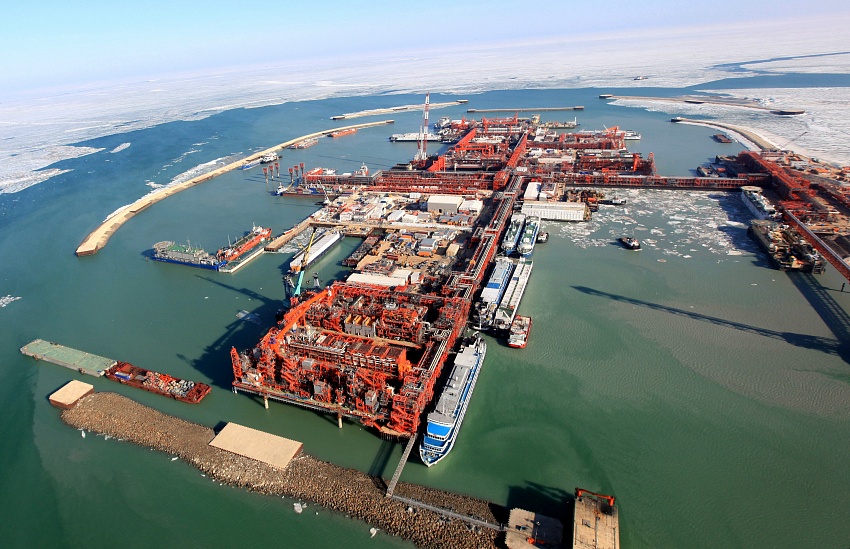
Kashagan oil field. Photo credit: Caspian News.
The draft 2027-2029 national budget assumes oil production of 96 million tons in 2027, an oil price of $70 per barrel and an exchange rate of 480 tenge per US dollar. Oil-sector revenues to the National Fund are projected at 3.78 trillion tenge (US$8.5 billion).
Meanwhile, Kazakhstan plans to raise annual refining capacity from around 18 million tons to nearly 40 million tons by 2040.
Kashagan is the wildcard
Oil and gas expert Abzal Narymbetov does not expect Kazakhstan to produce more crude than it can transport and export immediately. However, expanding refining capacity will take years given the scale of investment required.

Abzal Narymbetov.
“Any large capital-intensive project that requires a technological process, such as building a new refinery, is quite complex. It will require time, capital, money and resources,” Narymbetov told The Astana Times.
The longer-term picture could change if Kazakhstan significantly increases production at Kashagan, according to Nurlan Zhumagulov, executive director of the Energy Monitor Fund.
“If Kazakhstan finally manages to implement Phase 2 [second-stage expansion of oil production] at Kashagan, then a new oil pipeline will be needed,” Zhumagulov said in comments to The Astana Times.
He said one potential option could involve transporting additional crude from Atyrau towards the Mangystau Region and then across the Caspian Sea to Azerbaijan, by subsea pipeline or tankers. He estimated that such a route could potentially handle up to 37 million tons annually.
Refining cannot simply replace exports
Expanding domestic refining will give Kazakhstan more flexibility, but it cannot simply substitute for crude exports. Narymbetov said directing more crude to the domestic market could mean losing export revenues while still supporting domestic fuel prices.
“If we direct it to the domestic market, we will lose, first, export revenue, and second, we will subsidize the domestic market. So it is a double loss,” he said.

Nurlan Zhumagulov.
The issue also has a consumer dimension. Zhumagulov said that if refining reaches 40 million tons, fuel prices would eventually need to become market-based, but household incomes would need to rise accordingly.
“The question is whether people will be ready to pay world prices for petroleum products. That is a separate issue, because higher wages and incomes would be needed first,” he said.
The infrastructure race
Kazakhstan’s challenge is therefore not simply how much oil it can produce, but whether it will have enough economically viable options to process or export it when production changes.
The 96 million tons projected for 2027 is a near-term planning assumption. The bigger uncertainty lies beyond it: if Kashagan production expands while new refineries and alternative export routes are still being developed, infrastructure could become a constraint.
For Kazakhstan, the key will be ensuring that production growth, refining investment and export capacity develop in the right sequence.
