
ASTANA – People seeking kandas (ethnic Kazakhs returning to their historical homeland) status or permanent residence in Kazakhstan must take an online KAZTEST as part of a new pilot system assessing applicants’ potential for integration and permanent residence.
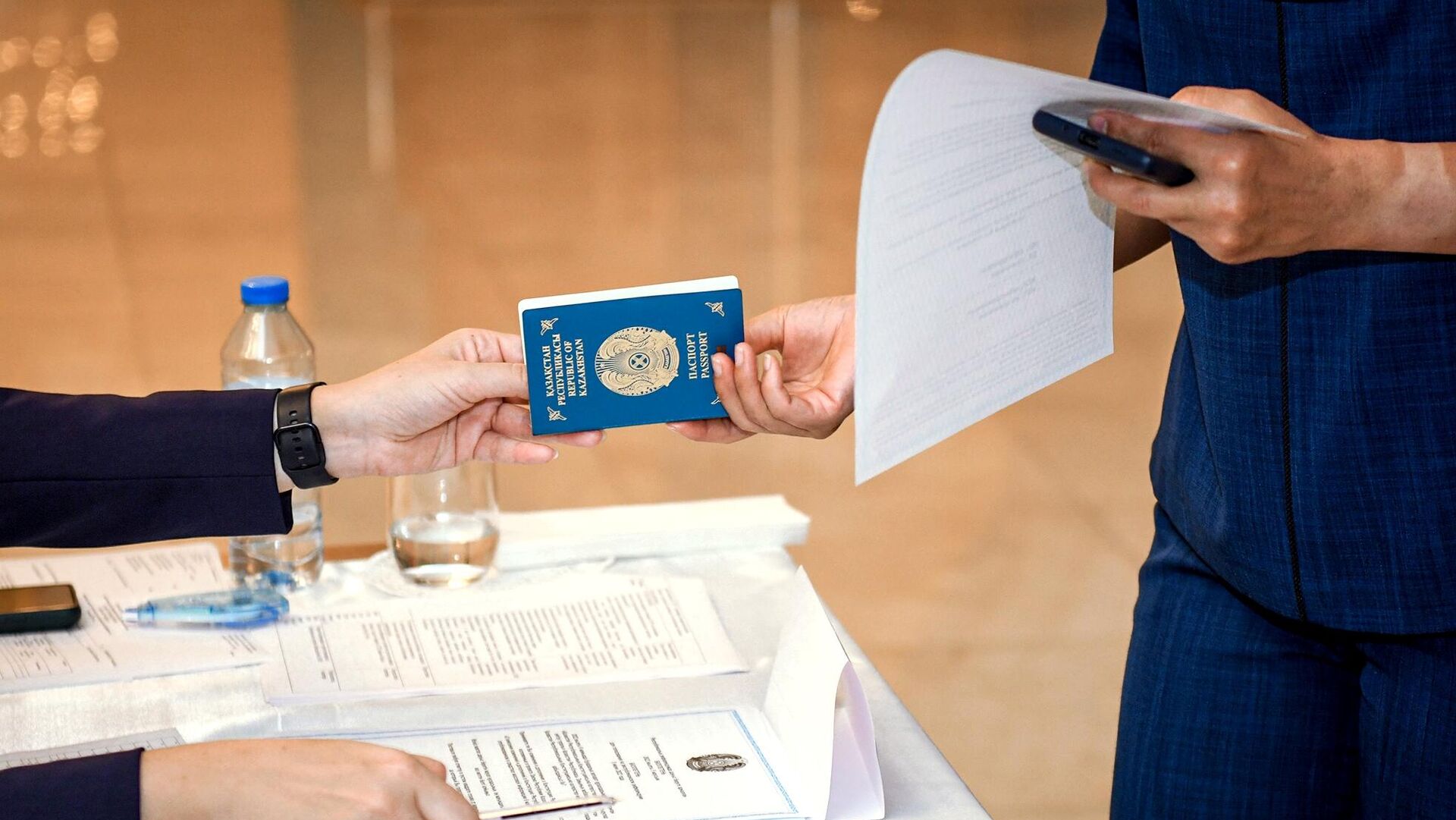
Photo credit: Sputnik.kz
The pilot project came into effect on Feb. 16, introducing a new procedure that combines a Kazakh language test, a migrant questionnaire and an interview. The system applies to ethnic Kazakhs seeking kandas status as well as foreign nationals and stateless persons planning to reside permanently in Kazakhstan.
The KAZTEST component assesses practical knowledge of the Kazakh language rather than advanced academic proficiency. According to the Ministry of Labor and Social Protection of the Population, the test focuses on understanding Kazakh in everyday situations and on whether applicants can comprehend spoken and written information needed for daily life and adaptation.
What does the test include?
The online test includes 60 multiple-choice questions in two sections: listening (20 questions, 20 minutes) and reading (40 questions, 50 minutes).
The total testing time is one hour and 10 minutes. Applicants must achieve at least 70% in each section to receive a certificate. Results are issued within three working days after the test and completion of the proctoring review.
The test is conducted under an online proctoring system. Candidates are therefore expected to have a functioning camera and microphone and a stable internet connection. Mobile phones, headphones, smartwatches, other electronic devices and study materials are prohibited during the test.
If a candidate does not reach the required score, the procedure allows two additional attempts within 30 calendar days of the last attempt.
Preparation is available
Applicants can prepare through adaptation and integration centers, where they can receive consultations, learn about the test format and complete practice tasks.
The aim is to help applicants understand the assessment structure in advance rather than approach it as an academic language exam.
The introduction of the KAZTEST requirement has prompted mixed reactions. Some kandas and observers have raised concerns that the test could be difficult for applicants who speak Kazakh but have limited reading skills, particularly those who have studied the language using a different alphabet.
In May, Murat Abenov, a former deputy of the Mazhilis, Kazakhstan’s lower house of the former Parliament, said he had received several complaints from kandas and noted that some ethnic Kazakhs returning to Kazakhstan do not know the Cyrillic alphabet.
At the same time, supporters of the requirement note that basic knowledge of the Kazakh language is a reasonable condition for people planning to live permanently in Kazakhstan. The ministry said the assessment aims to determine whether applicants have sufficient practical Kazakh-language skills for everyday communication and integration. Similar language requirements are also used internationally in procedures for permanent residence or citizenship.
Part of a broader migration assessment
KAZTEST is only the first stage of the broader assessment. After completing the language test, applicants proceed to a questionnaire covering personal, educational and professional information, followed by verification procedures and an interview.
For kandas, the new procedure is part of a wider pilot system for determining an applicant’s eligibility for kandas status. The rules also require those receiving kandas status to relocate to government-designated settlement regions.
The pilot is currently scheduled to remain in force through Dec. 31, meaning the procedure could still be adjusted based on implementation experience.
