
ASTANA — President Kassym-Jomart Tokayev’s participation in the G20 summit in Miami this December is set to put Kazakhstan’s carefully balanced foreign policy to a new test, as growing United States (US) interest in the country creates opportunities for deeper economic and strategic cooperation while intensifying competition among the major powers with which Astana has sought to maintain close ties.
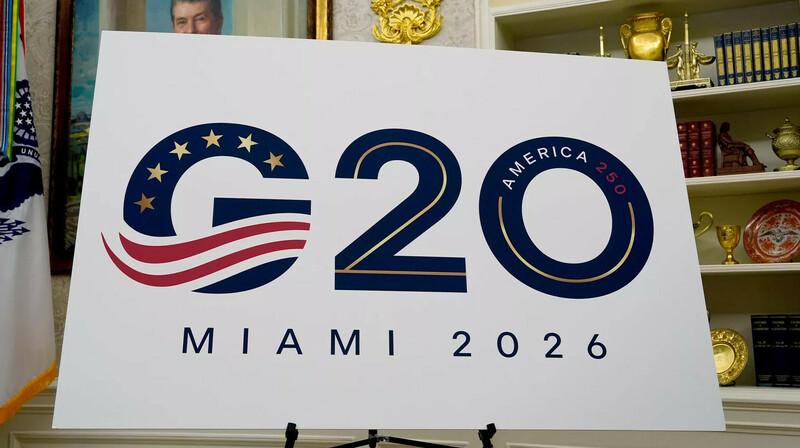
Photo credit: Alex Brandon.
Kazakhstan is not a G20 member and has participated in the summit only twice before, in St. Petersburg in 2013 and Hangzhou in 2016, each time at the invitation of the host country. This time, however, the invitation comes from the US, amid a rapidly expanding Kazakhstan-U.S. relationship and a sharp rise in Washington’s interest in the wider Trans-Caspian region.
The invitation can therefore be read in two ways. It may signal that Kazakhstan has become a more important strategic and economic partner for Washington. But it may also reflect the Trump administration’s broader effort to strengthen ties across a region increasingly important for energy, critical minerals, trade routes and technology. The difference matters because Kazakhstan’s traditional strength — its ability to work with competing powers without aligning exclusively with any of them — may also become harder to sustain as geopolitical competition deepens.
Iskander Akylbayev, CEO of Xander Group and chairman of CFive, sees the summit as a practical opportunity for Kazakhstan.
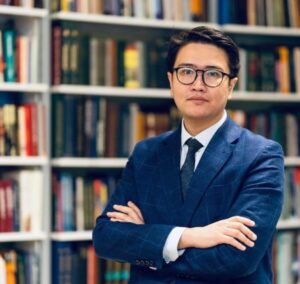
Iskander Akylbayev, CEO of Xander Group and chairman of CFive.
“My expectation is that the Miami G20 will be highly pragmatic and transaction-driven,” he said, pointing to economic growth, secure energy supply chains and technological innovation as central priorities of the U.S. G20 presidency.
He added that Tokayev’s participation “should therefore be seen as more than a diplomatic gesture,” noting that the invitation reflects a wider change in Washington’s view of Central Asia, which he believes is moving “from the geopolitical periphery to the global economic agenda.”
For Akylbayev, Kazakhstan’s economic weight helps explain the shift. He noted that Kazakhstan generates more than 60% of Central Asia’s GDP and accounts for approximately 75% of the region’s trade with the US, while bilateral goods trade reached $5 billion in 2025.
The broader relationship has indeed acquired a markedly commercial dimension over the past year. During President Kassym-Jomart Tokayev’s November 2025 visit to Washington, Kazakhstan and the United States signed 29 agreements worth $17 billion across industry, digitalization, education, healthcare, transport and other sectors. The Astana Times reported at the time that the visit represented a new phase in the strategic partnership, with experts describing a shift from symbolic diplomacy toward a more results-oriented model of cooperation.
Akylbayev said Miami should therefore be seen not as the culmination of this process but as an opportunity to move it into a more advanced stage.
“For Kazakhstan, however, the invitation itself is not the result. The real task is to convert political access into investment, technology and market access,” he said.
He pointed to critical minerals, AI, advanced manufacturing and the Middle Corridor, as well as Kazakhstan’s accession in June to the U.S.-led Pax Silica initiative, which focuses on trusted supply chains linking semiconductors, critical minerals, data centers, energy infrastructure and high-tech manufacturing. Akylbayev’s broader argument is that Kazakhstan should move beyond its traditional role as a resource supplier.
“Our ambition should not be to export minerals and later import the technologies made from them,” he said, highlighting that Kazakhstan should process more resources domestically, expand computing infrastructure, develop engineering talent and produce higher-value components.
The logic is attractive, particularly as the US seeks to diversify strategic supply chains. Kazakhstan has become an important supplier of uranium and has substantial deposits of tungsten, copper, lithium and other critical minerals, while its geographic position gives it a central role in the Trans-Caspian transport route linking China and Europe.
Akylbayev believes this lets Kazakhstan present itself in Miami as a “connector state”—linking East and West, natural resources and technology, and major powers without becoming dependent on any one of them.
But that proposition rests on an important assumption: that the same balanced foreign policy that makes Kazakhstan attractive to multiple powers will continue to be accepted as competition among those powers intensifies. Darren Spink, managing director of Janus Forum and a non-resident fellow with the Danube Institute, believes that assumption may face its greatest test in technology.

Darren Spink, managing director of Janus Forum and a non-resident fellow with the Danube Institute.
“Kazakhstan has built its foreign and commercial policy around a balanced approach, but artificial intelligence (AI) may be emerging as the sector where Washington is least willing to accept that balance,” Spink said.
He pointed to the Middle Corridor as an example of an area where competing powers can still pursue overlapping interests. AI, however, is different, he said, because Washington increasingly sees technology, data infrastructure, semiconductors and supply chains through a strategic rather than purely commercial lens.
Kazakhstan joined the U.S.-led Pax Silica initiative in June, while also deepening its participation in Chinese-led technology and governance structures. Spink cited Kazakhstan’s role in the World Artificial Intelligence Cooperation Organization (WAICO), its participation in the Friends of Global Governance, and major technology agreements announced with China. For Washington, he noted, this could eventually create a problem. The concern is not necessarily that Kazakhstan is cooperating with China, but that some areas of cooperation may move from economic diversification into competing technological ecosystems, particularly if Beijing seeks to influence AI standards, governance and infrastructure in ways that conflict with U.S. strategic interests.
This brings the discussion back to Tokayev’s G20 invitation. Spink agrees that the invitation reflects Kazakhstan’s growing importance to Washington, but he sees another layer behind it.
“President Tokayev’s invitation to the G20 later this year should be viewed as recognition of both Kazakhstan’s growing importance to the US and of the Trump Administration’s broader geopolitical priorities,” he said.
Spink pointed to the nearly $17 billion in commercial agreements announced during Tokayev’s 2025 Washington visit and Kazakhstan’s participation in several U.S.-backed initiatives as evidence that Washington increasingly values the bilateral relationship.
“Perhaps the clearest demonstration of the value Washington now places on the relationship came when Vice President JD Vance personally urged Ukrainian President Volodymyr Zelensky to halt attacks affecting the Caspian Pipeline Consortium, protecting both Kazakhstan’s principal oil-export route and significant U.S. commercial interests,” Spink said.
But Spink says that Washington is also looking beyond the bilateral relationship toward the wider Trans-Caspian region.
“Just as Kazakhstan has pursued a balanced foreign policy among competing great powers, Washington is increasingly strengthening relationships across the Trans-Caspian rather than relying on any single regional partner. Reports that the leaders of Uzbekistan and Azerbaijan have also been invited to the G20 demonstrate this,” he said, pointing to the region’s growing importance to U.S. economic and strategic planning.
That distinction is important. If the invitation is read exclusively as recognition of Kazakhstan’s growing individual importance, its significance lies primarily in the bilateral relationship. If it is instead understood as part of a broader U.S. strategy toward the Trans-Caspian, Kazakhstan is one particularly important piece of a larger regional puzzle.
That broader regional interpretation does not undermine the case for Kazakhstan’s growing importance. Rather, it puts it in context. Washington has clear reasons to deepen ties with Kazakhstan, but also increasingly sees the Trans-Caspian as a strategic space for alternative trade routes, energy supplies, critical minerals and technology partnerships.
Kazakhstan’s growing importance to Washington is real, and the scale of the agreements signed in 2025 shows the relationship has moved beyond diplomatic symbolism. At the same time, the very factors that make Kazakhstan attractive to Washington – its location, resources and ability to maintain relations with multiple powers are also what may eventually put its balancing strategy under greater pressure.
This may be the central question Tokayev will carry to Miami. Kazakhstan has spent decades turning its position between major powers into an advantage. Its first two G20 appearances came at the invitation of Russia and China, while its third will come at the invitation of the United States. The sequence is almost a snapshot of Kazakhstan’s broader foreign policy: engage with competing centers of power without becoming dependent on any one.
But the international environment is changing. Trade can remain multipolar. Transport corridors can serve multiple markets. Investment can come from several directions. Technology is less forgiving. That is where Akylbayev’s optimism about Kazakhstan’s economic opportunity meets Spink’s warning about strategic limits.
Therefore, Miami should not be judged simply by whether Tokayev receives attention from world leaders or whether another package of commercial agreements is announced. The more consequential test will be whether Kazakhstan can convert its growing relevance into long-term industrial and technological capacity while retaining enough flexibility to work with competing powers.
For now, the answer is still open. Kazakhstan has something that major powers increasingly value: geography, resources, connectivity and political predictability. The challenge is to turn those advantages into bargaining power without letting them become the very reasons others ask Kazakhstan to choose.
